



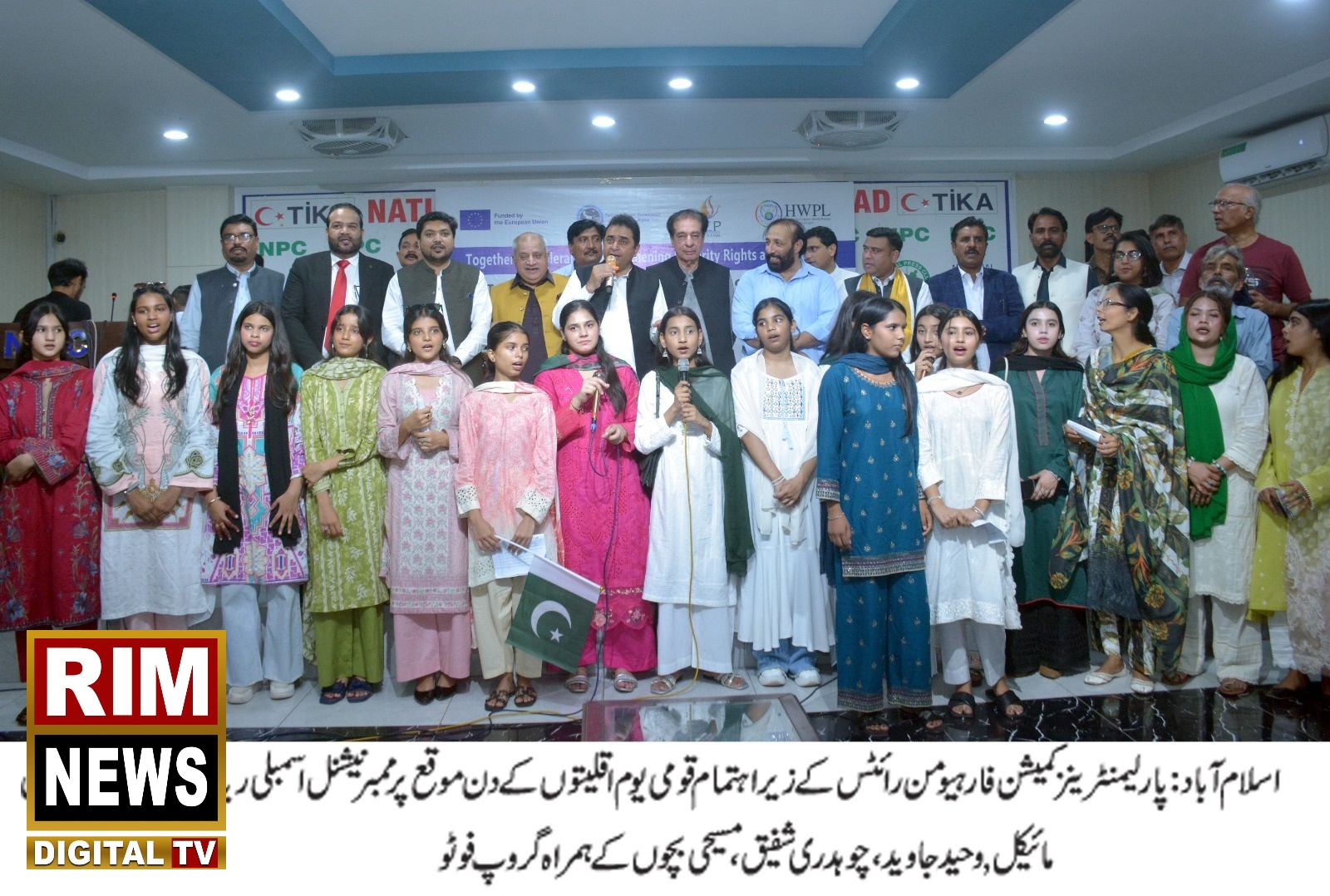
Every Member of Society Must Play a Role in Protecting Minority Rights, Says Kamran Michael
Islamabad (News Reporter):
Member of the National Assembly Riaz Fatyana has said that all citizens living in Pakistan enjoy equal rights, and it is the responsibility of the state to ensure the full implementation of the guarantees provided by the Constitution.
He said that instead of merely displaying portraits of Quaid-e-Azam Muhammad Ali Jinnah and quoting his speeches, the nation must follow his vision and principles. Under Article 25 of the Constitution, all citizens are equal before the law; therefore, providing protection and equal opportunities to minorities is the responsibility of the state.
He called on the government to make existing laws and institutions concerning minority rights more effective and ensure their immediate implementation.
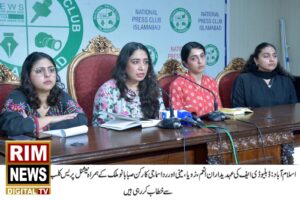
Riaz Fatyana expressed these views while addressing a seminar organized by the Parliamentarians Commission for Human Rights at the National Press Club Islamabad on the occasion of National Minority Day.
Besides MNA Riaz Fatyana, Senator Kamran Michael, Chaudhry Shafiq, Pandit Rakesh Chand, Afzal Butt, Focal Person Prime Minister’s Youth Programme Punjab Waheed Javed Advocate and other speakers also addressed the seminar. Tariq Chaudhry, Sehrish Qureshi, Tariq Warq, Bilal Dar and other senior parliamentarians, minority rights activists, journalists and people from various walks of life attended the event.
The speakers said that August 11 is a day to pay tribute to the services rendered by non-Muslim communities living in Pakistan to the country’s development, progress and stability. However, they stressed that the rights and issues of minorities should not be limited to a single day.
Riaz Fatyana said that August 11 is not merely a symbolic day but a reminder of the vision of the Founder of Pakistan, Quaid-e-Azam Muhammad Ali Jinnah, according to which every citizen of Pakistan should have complete freedom regarding their religion and worship.
He said that if the nation wishes to pay tribute to Quaid-e-Azam, it must go beyond his portraits and speeches and implement his vision and principles in practice.
He noted that the Pakistan Resolution, Quaid-e-Azam’s August 11 speech and the Constitution of 1973 all guarantee equal rights for citizens. Under Article 25 of the Constitution, all citizens are equal before the law, making it the state’s responsibility to provide minorities with protection and equal opportunities.
Riaz Fatyana further said that the Supreme Court’s 2014 judgment also provided clear guidance to the state regarding the protection of minority rights. He urged the government to strengthen laws and institutions related to minority rights and ensure their effective implementation.
He said that education, tolerance, mutual respect and interfaith harmony must be promoted to eliminate religious prejudice and extremism from Pakistan. He also emphasized the need to promote joint activities, clubs and associations to bring citizens belonging to different religions and schools of thought closer together.
Senator Kamran Michael said that several laws exist concerning minority rights, but the real issue is their full implementation. Legislation has been enacted regarding minorities, including the Hindu Marriage Bill and Christian marriage laws; however, there is a need to ensure that these laws are implemented effectively.
He said that protecting minority rights is not solely the responsibility of parliamentarians; every member of society must play a role. Without a change in social attitudes, legislation alone cannot produce the desired results.
He urged religious leaders to use their sermons and messages to promote love, brotherhood, tolerance and respect.
Kamran Michael said that Pakistan’s green and white flag symbolizes that Muslims and non-Muslims are equal citizens of the country. The white portion represents minorities, and protecting its dignity is a collective responsibility.
He said that the new generation must be given a Pakistan where every child has the opportunity to progress according to their abilities and contribute to the country’s development.
Chaudhry Shafiq said that August 11 is a day of both celebration and accountability for minority communities. On this day, representatives sitting in Parliament should be asked what practical steps they have taken to protect minority rights and resolve their problems.
He said that minority communities had played a significant role in Pakistan’s independence and development, but unfortunately their contributions had gradually been forgotten. Past decisions concerning educational institutions and other institutions run by minorities had also contributed to increasing their problems.
Chaudhry Shafiq said that Pakistan does not belong to any single religion or community but to all Pakistanis. Christians, Hindus, Sikhs and other minority communities, while retaining their religious identities, are first and foremost Pakistanis and have always played their role in the country’s security, survival and stability.
He said minority communities should not be required to prove their patriotism every year. Instead, society should learn from their positive attitudes, love for Pakistan and contributions to national development, while promoting religious tolerance, equality, brotherhood and mutual respect.
PFUJ President Afzal Butt said that Quaid-e-Azam Muhammad Ali Jinnah’s vision regarding minority rights in Pakistan was clear. He said that all citizens living in the state enjoy equal rights, which represents the true spirit of Quaid-e-Azam’s Pakistan.
He said the National Press Club has the distinction of organizing Christmas celebrations with Christian journalists for the past 18 years. On Christmas, Christian journalists and their families are invited to the National Press Club, special programmes are arranged for their children, and they are made to feel that they are an equal part of the country and society.
Afzal Butt said that interfaith harmony cannot be promoted through speeches and slogans alone; it requires practical measures, and the process must begin in homes and institutions.
The speakers expressed their resolve to continue collective efforts to promote mutual respect, tolerance, love and harmony among all religious communities living in Pakistan.
During the ceremony, young girls presented national songs in beautiful voices, making the atmosphere of the event more pleasant and filling it with patriotic spirit.