


Minorities Are an Integral Part of Pakistan; Religious Hatred Must End and Love and Tolerance Must Be Promoted, Speakers Say
Islamabad (News Reporter): President of the Central Muslim League, Inam-ur-Rehman Kamboh, said that it is the responsibility of the state to protect the rights of all Pakistanis.
He said that Christians, Sikhs, Hindus, and other communities also played an important role in the creation of Pakistan, and their contributions would always be remembered in history.
He recalled that Quaid-e-Azam Muhammad Ali Jinnah, in his historic address on August 11, 1947, had made it clear that all citizens of Pakistan would be equal and that every person would have complete freedom to worship according to their religion and beliefs.
He said that, in order to overcome the challenges currently facing Pakistan, the spirit with which the country was established must be revived. The nation must rise above religion, color, ethnicity, and community and play its role in the defense, security, and development of the country.
He said that terrorism has no religion and terrorists are enemies of humanity. The entire nation must remain united against them. Unity, love, and brotherhood are essential for Pakistan’s security and stability.
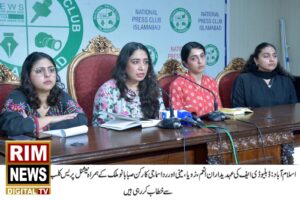
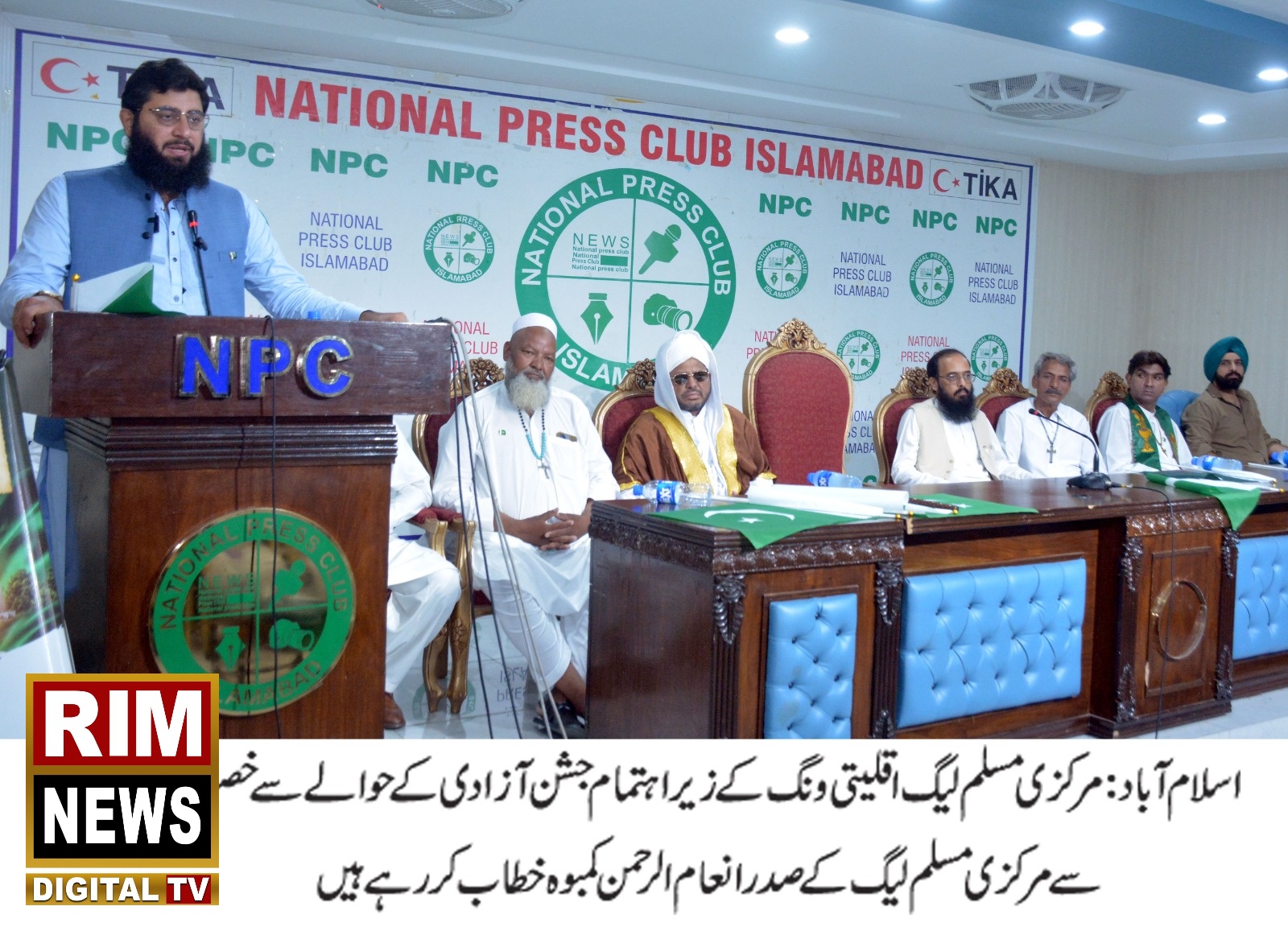
He expressed these views while addressing an event organized by the Central Muslim League Islamabad at the National Press Club Islamabad in connection with National Minorities Day.
The event was attended by Central Muslim League President Inam-ur-Rehman Kamboh, Central Muslim League Minority Wing Islamabad President Amanat Masih, journalist Harmeet Singh, Sahibzada Pir Syed Sultan Ahmed, Saifullah Minto, Naveed Masih, Shaukat Salfi, Pastor Sohail Ishtiaq, Central Spokesperson Saleem Ilyas, other leaders, representatives of minority communities, and distinguished guests.
Central Muslim League Central Spokesperson Saleem Ilyas performed the duties of stage secretary.
Addressing the gathering, Amanat Masih, President of the Central Muslim League Minority Wing Islamabad, referred to Jagannath Mandal, a close associate of Quaid-e-Azam and Pakistan’s first Law Minister. He said that at the time of Pakistan’s creation, Quaid-e-Azam had made it clear that the state’s relationship with its citizens would not be based on their religion but on their equal citizenship rights.
He said that Pakistan certainly faces challenges and minority communities also encounter difficulties, but despite difficult circumstances, the majority of non-Muslim Pakistanis have considered Pakistan their homeland and remained loyal to it.
He said Pakistan is equally sacred to them as Makkah and Madinah are to Muslims.
Amanat Masih emphasized the need to promote love, tolerance, and brotherhood rather than hatred through educational curricula, the media, and society. He said that to preserve Pakistan as a beautiful bouquet of diverse communities, citizens should not be divided on the basis of religion, sect, or community; rather, everyone should first and foremost be regarded as Pakistani.
Sahibzada Sultan Ahmed said that people belonging to every segment of society and every religion made sacrifices for the creation of Pakistan. He said Quaid-e-Azam Muhammad Ali Jinnah had made it clear that every citizen in Pakistan would have the freedom to visit their place of worship and live according to their religion.
He said Pakistan belongs to everyone and all citizens must work together for its development, security, and stability. He also described Pakistan’s recent defense and diplomatic developments as important and said the entire nation must remain united for national security and efforts against terrorism.
The speakers said that minority communities also made extraordinary sacrifices alongside Muslims for the creation of Pakistan. They said there is now a need to revive the spirit of love, fraternity, brotherhood, and unity that existed at the time of Pakistan’s creation.
Journalist Harmeet Singh said that the word “minority” can sometimes create a sense of inferiority in a person. Therefore, he said he viewed Minorities Day as a day for non-Muslim Pakistanis.
He said that during difficult times, his Muslim brothers have always stood by them, and this unity is the real strength of Pakistan.
Other speakers said that Quaid-e-Azam Muhammad Ali Jinnah had clearly conveyed in 1947 that all citizens living in Pakistan were equal and that everyone would have complete freedom to worship and live according to their religion.
They said Pakistan’s Constitution and the state guarantee equal rights for all citizens. Therefore, no Pakistani should consider themselves weak or a second-class citizen merely because of their religion.
The speakers emphasized that promoting love, tolerance, and brotherhood among people of all schools of thought and religions is essential to making Pakistan strong and stable. They said that from the pulpits and prayer niches of mosques, as well as from every other platform, messages of love and peace should be promoted instead of hatred.
Referring to various incidents from the life of Prophet Muhammad (PBUH), the speakers said that Islam has always taught respect, tolerance, and good treatment toward the People of the Book and followers of other religions.
They referred to the presentation of the Muslim position by Hazrat Jafar (RA) at the court of the King of Abyssinia, Negus, as well as references to Prophet Jesus (AS) and Mary (AS), saying that Islam teaches belief in other prophets and divine scriptures.
The speakers said that Christian, Sikh, Hindu, Parsi, and other minority communities have played important roles in the development, progress, and defense of Pakistan.
They said the beauty of Pakistan lies in its diverse religions, cultures, and communities, which together form a beautiful bouquet, and preserving its harmony is a shared responsibility of all citizens.
At the conclusion of the event, Inam-ur-Rehman Kamboh led the participants in slogans of “Pakistan Zindabad” and thanked all guests, journalists, and participants.
The event concluded with a renewed commitment to Pakistan’s security and stability, protection of minority rights, and promotion of interfaith harmony.