






By Areeba Younis
Date: 11 August 2026
Master’s Program, School of Economics and Management Yanshan University, Qinhuangdao City, Hebei Province, China
Imagine Applying for a Job That Doesn’t Exist Today
If someone had told a university student twenty years ago that companies would soon hire AI Ethics Specialists, Prompt Engineers, Digital Transformation Managers, Human-AI Collaboration Consultants, or Intelligent Workforce Analysts, it might have sounded like science fiction. Today, these careers are becoming reality.
The pace of technological change is rewriting the rules of employment faster than ever before. Artificial intelligence, automation, big data, green technology, and digital globalization are creating entirely new professions while transforming many traditional ones. For students entering the workforce, the greatest challenge is no longer choosing a career— it is preparing for careers that have not yet been fully defined.
As a Master’s student in the School of Economics and Management at Yanshan University, I have come to realize that the most valuable education is not about memorizing today’s answers. It is about learning how to solve tomorrow’s questions.
Education for an Unknown Future
Throughout history, universities have preparedstudents for existing professions.
Today’s reality is different. According to international labor market trends, many graduates will eventually work in roles that are still emerging as technology reshapes industries around the world. This new reality requires universities to rethink education itself.
At Yanshan University, learning goes beyond acquiring technical knowledge. Students are encouraged to develop analytical thinking, adaptability, creativity, digital literacy, communication skills, and interdisciplinary problem-solving abilities. These competencies remain valuable regardless of how industries continue to evolve. Rather than preparing students for one specific occupation, the university prepares them to adapt confidently throughout their professional lives.
Artificial Intelligence Is Changing Work— Not Replacing People
Artificial intelligence often generates headlines predicting that machines will replace human workers. My academic research has led me to a different perspective. The future workplace is unlikely to belong solely to humans or machines. Instead, it will belong to organizations that successfully combine technological intelligence with uniquely human capabilities.
AI can process enormous amounts of information within seconds, automate repetitive tasks, identify patterns, and support decision-making. Yet qualities such as empathy, ethical judgment, leadership, creativity, cultural understanding, and emotional intelligence remain fundamentally human. My research on artificial intelligence and human resource management has shown me that technology is most valuable when it enhances human potential rather than replacing it. The future belongs to collaboration between people and intelligent systems.
Learning Innovation Through Experience
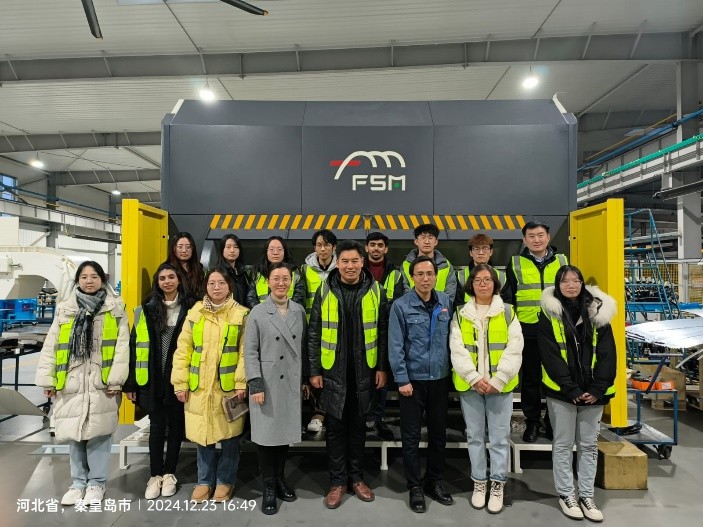
Innovation cannot be learned exclusively through textbooks. At Yanshan University,
students regularly participate in seminars, research projects, innovation competitions, interdisciplinary discussions, and entrepreneurial activities that encourage creative thinking and practical problem-solving.
These experiences simulate real-world challenges where there is rarely a single correct answer. Students learn to work under uncertainty, collaborate with diverse teams, communicate ideas effectively, and transform concepts into practical solutions. This approach develops confidence— one of the most important qualities for graduates entering rapidly changing industries.
Thinking Globally, Learning Locally
One of the greatest advantages of studying in China is observing innovation within one of the world’s fastest-changing economies.
Living in Qinhuangdao and studying in Hebei Province has allowed me to experience how education, technology, manufacturing, and digital transformation are closely connected. Modern infrastructure, intelligent industries, and research-driven universities create an environment where students witness innovation not only inside classrooms but throughout society.
At the same time, Yanshan University’s international community brings together students from different countries who contribute unique perspectives on business, technology, and economic development. Every classroom discussion becomes an opportunity to understand how global challenges require international solutions.
My Research, My Future
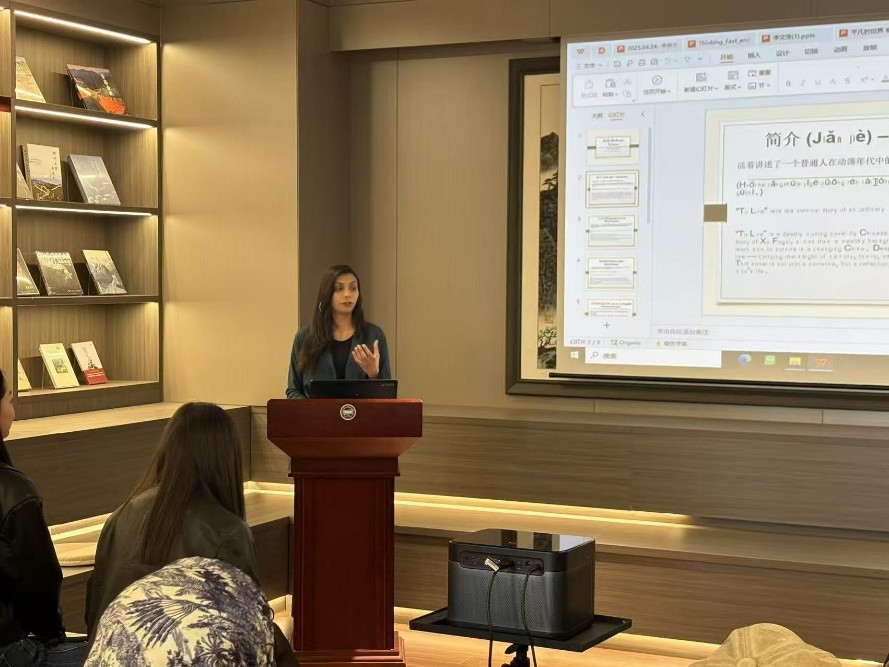
When I began my Master’s degree, I viewed artificial intelligence primarily as an emerging business technology. Today, my research has shown me something much deeper.
Artificial intelligence is transforming how organizations recruit talent, develop employees, evaluate performance, support decision-making, and design the future workplace. Understanding these changes requires more than technical knowledge. It requires understanding human behavior, organizational culture, ethics, and leadership.
Studying these issues has inspired me to pursue a career that combines business strategy with responsible technological innovation. I no longer see myself preparing for a single profession. I see myself preparing for continuous learning.
Why Adaptability Matters More Than Job Titles
The question students often ask is, “What job will I have after graduation?” Perhaps a better question is, “What abilities will help me succeed no matter how work changes?”
Graduates who continuously learn new technologies, embrace change, communicate across cultures, and solve unfamiliar problems will remain valuable regardless of how industries evolve. Yanshan University encourages exactly this mindset. Instead of fearing change, students learn to view change as an opportunity for innovation.
Universities as Architects of the Future
Higher education is entering a new era. Universities are no longer simply institutions that transfer knowledge from professors to students. They are becoming innovation ecosystems where research, entrepreneurship, technology, and international collaboration intersect. Yanshan University reflects this transformation by encouraging interdisciplinary learning, supporting scientific research, promoting entrepreneurship, and preparing students to contribute to emerging industries. Its educational philosophy recognizes that tomorrow’s leaders will need much more than academic qualifications. They will require resilience, global awareness, technological understanding, ethical responsibility, and the confidence to lead through uncertainty.
A Personal Journey Across Continents
Coming from Pakistan to pursue graduate studies in China has been one of the most transformative decisions of my life.Beyond earning an internationally recognized degree, I have gained exposure to new cultures, new ways of thinking, and new approaches to solving complex challenges.
Every research project, classroom discussion, interaction with professors, and
collaboration with classmates has expanded my understanding of what it means to become a truly global professional. My education has become more than preparation for employment. It has become preparation for lifelong growth.
Building Careers That Will Shape Tomorrow
The careers of the future will not simply be created by technology. They will be created by people who understand how to use technology responsibly to improve businesses, strengthen communities, and solve global challenges.
As I continue my research journey at Yanshan University, I am reminded that the future is not something students wait to discover after graduation. It is something they begin creating while they are still learning. Preparing for jobs that do not yet exist requires curiosity before certainty, adaptability before routine, and innovation before tradition.
Yanshan University has given me more than academic knowledge. It has given me the confidence to embrace uncertainty, the skills to navigate technological change, and the vision to contribute to a future where artificial intelligence and human creativity work together— not in competition, but in partnership. The jobs of tomorrow may still be taking shape, but the people who will lead them are already preparing today.