



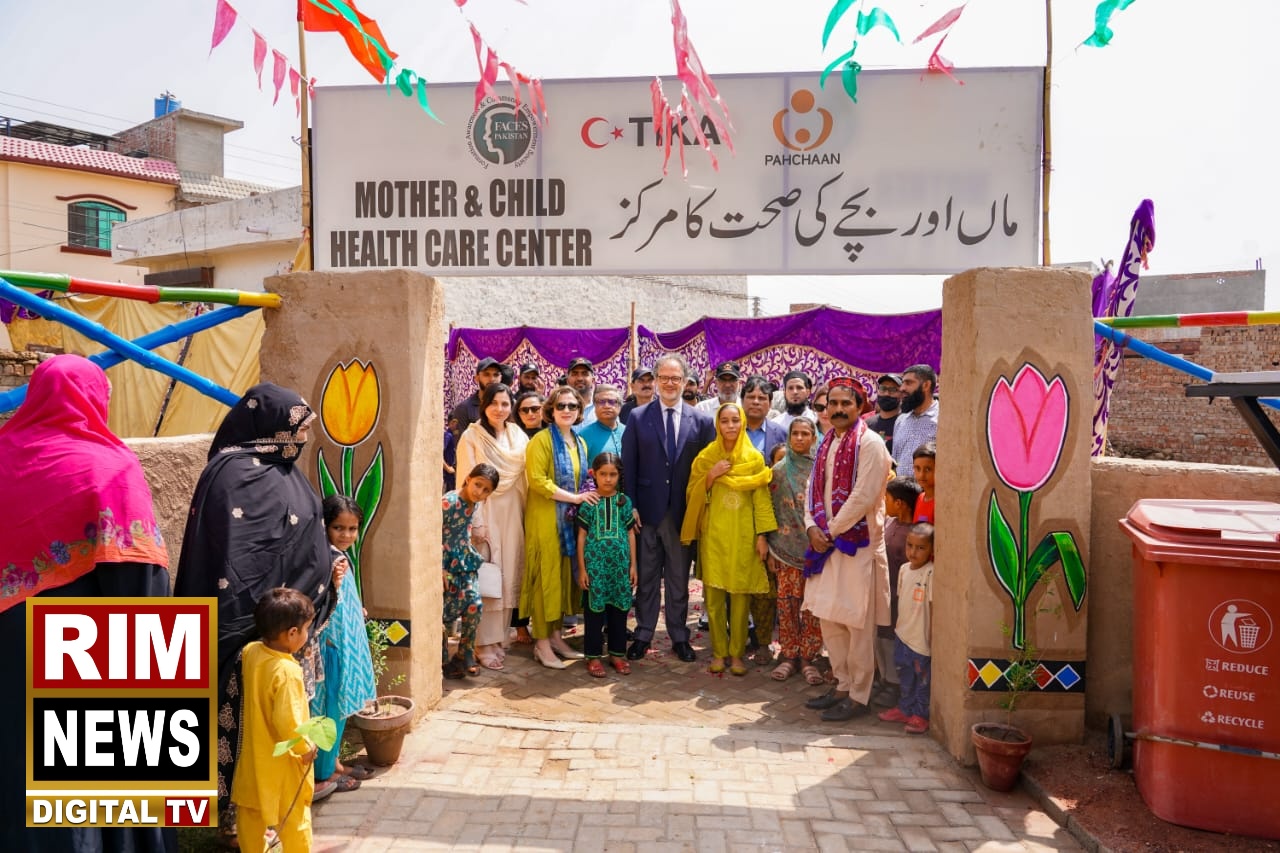
LAHORE (Bureau Report): The Turkish Cooperation and Coordination Agency (TİKA) has inaugurated a mother and child health centre in Lahore’s Raiwind area, providing accessible primary healthcare facilities to approximately 15,000 people living in surrounding communities.
The project was completed under the framework of the “Year of the Family,” announced by the President of the Republic of Türkiye in 2025. The project aims to strengthen maternal and child healthcare services and improve access to preventive and community-based healthcare facilities for vulnerable and needy families.
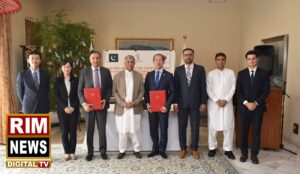
The inauguration ceremony was attended by Consul General of the Republic of Türkiye in Lahore Mehmet Emin Şimşek, TİKA Pakistan Coordinator Saliha Tuna, FACES Pakistan President Javed William, Pehchan President Professor Dr. Naeem Zafar, local elders and residents of the area.
Addressing the ceremony, Turkish Consul General Mehmet Emin Şimşek appreciated the progress made in Pakistan in recent years to reduce maternal and newborn mortality rates. He said that the foundation of a healthy future could only be laid through healthy mothers and children.
Referring to the longstanding fraternal relations between Pakistan and Türkiye, he said that Türkiye, through TİKA, would continue supporting development and healthcare projects that directly improve the lives of people.
In her address, TİKA Pakistan Coordinator Saliha Tuna said that the project reflected Türkiye’s people-centred approach to development cooperation. Referring to the “Year of the Family,” she said that investing in mothers, children and families was, in fact, an investment in the future of society.
She further said that the centre represented an effective model of sustainable partnership under which TİKA had supported the establishment of the centre, FACES Pakistan was responsible for its management and operations, while Pehchan was providing the medical specialists and healthcare professionals required for the centre.
FACES Pakistan President Javed William thanked TİKA for its cooperation and said that the people of Raiwind were the true owners of the project, as the centre had been established keeping in view the genuine healthcare needs of the local community.
Unlike large hospitals, where specialised treatment is primarily provided, community-based primary healthcare centres serve as the first point of contact between families and the healthcare system. Along with basic medical services, these centres provide maternal and child health monitoring, preventive healthcare, health awareness, counselling, early diagnosis of diseases and timely referrals for advanced treatment when required.
The centre has been established at a strategic location to ensure maximum accessibility. It will serve the needs of an underserved area inhabited by both Muslim and Christian communities, enabling needy families to access basic and essential healthcare facilities close to their homes.
The centre also reflects the concept of sustainable development. Inspired by local traditional architecture, it has been designed as a low-cost, environmentally friendly facility adapted to local climatic conditions, combining traditional construction methods with modern healthcare requirements.
The design of the centre presents a practical, replicable and sustainable model for community healthcare infrastructure in underserved areas.