






Air Pollution Reaching Dangerous Levels; Youth to Play Effective Role in Policymaking, Says Zainab Naeem
Decline in Life Expectancy Due to Air Pollution; Consultative Meeting Held in Islamabad to Review Causes and Impacts of Environmental Issues and Government Response
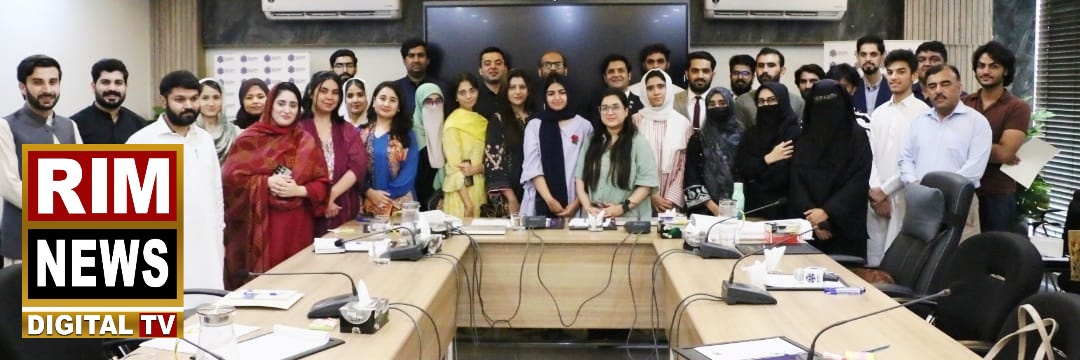
ISLAMABAD (Staff Reporter): Alarming facts regarding Pakistan’s environmental situation emerged during a consultative meeting organised jointly by the United Nations Environment Programme (UNEP), the Sustainable Development Policy Institute (SDPI) and the Ministry of Climate Change (MoCC).
On the occasion, it was also announced that, for the first time in Pakistan’s history, a special edition of the National State of Environment Report would be prepared for young people so that the voice of youth could be formally incorporated into national environmental policymaking.
The purpose of the meeting was to obtain suggestions and opinions from young people, which will be included in the special edition of the report to be published in the future. Notably, Pakistan’s last National State of Environment Report was published in 2016 and did not include a separate chapter or special edition for youth.
On the occasion, SDPI Associate Research Fellow and Head of the Environmental Sustainability and Circular Economy Unit Zainab Naeem said that the opinions obtained from young people would be directly incorporated into the special youth edition of the national report.
She said that in the past, young people had not received adequate representation in the environmental policymaking process. However, practical steps were now being taken to address this gap so that the younger generation could play an effective role in national decision-making.
SDPI Research Associate Neelam Paray briefed participants on the preliminary findings of the report, which had been prepared under the internationally recognised DPSIR (Drivers, Pressures, State, Impact and Response) framework.
She explained that this methodology provides a comprehensive assessment of the underlying social and economic causes of environmental problems, the pressures resulting from them, the current state of the environment, their impacts on the public and the government response.
She said that air pollution had been identified as one of the most serious problems in Pakistan. Referring to global research studies, Neelam Paray said that air pollution was reducing the average life expectancy of every citizen in Pakistan by approximately 3.4 to 3.9 years, while South Asia was among the regions of the world most severely affected by the impacts of air pollution.
She further said that if Pakistan’s existing National Clean Air Policy was effectively implemented, PM2.5 emissions could be reduced by 36 to 38 percent by 2030 and by approximately 80 percent by 2050.
According to the report, in addition to air pollution, 12 key sectors were reviewed in detail, including water resources, agriculture, environmental health, natural disaster risks, governance, accountability and environmental violations reported across the country.
The report noted that the availability of environmental data was not uniform across the provinces. As a result, relatively more information was obtained from Punjab because its Environmental Protection Agencies (EPAs) had more records available compared to other provinces.
Weak enforcement of environmental laws, inadequate monitoring systems and a lack of financial resources were highlighted in the report as major policy shortcomings.
To address these issues, short- and long-term recommendations were also presented, including strict enforcement of environmental laws, easier access to international climate finance, including the Green Climate Fund, the establishment of mandatory wastewater treatment plants near industrial areas, the gradual phase-out of single-use plastics, the promotion of environmentally friendly alternatives, climate-resilient agricultural systems and increased investment in clean energy.
Following the technical briefing, participants were divided into four thematic working groups.
Environmental experts, climate change specialists, representatives of civil society, teachers, students and experts from various fields attended the consultative meeting. At the conclusion of the meeting, certificates of appreciation were also distributed among all participants.