




By Muhammad Awais Hamza
Date: 13 August 2026
Master’s Program, School of Economics and Management
Yanshan University, Qinhuangdao City, Hebei Province ,China
A bridge does not exist simply to connect two points. Its real purpose is to allow people to cross from one side to another.
Universities can play the same role.
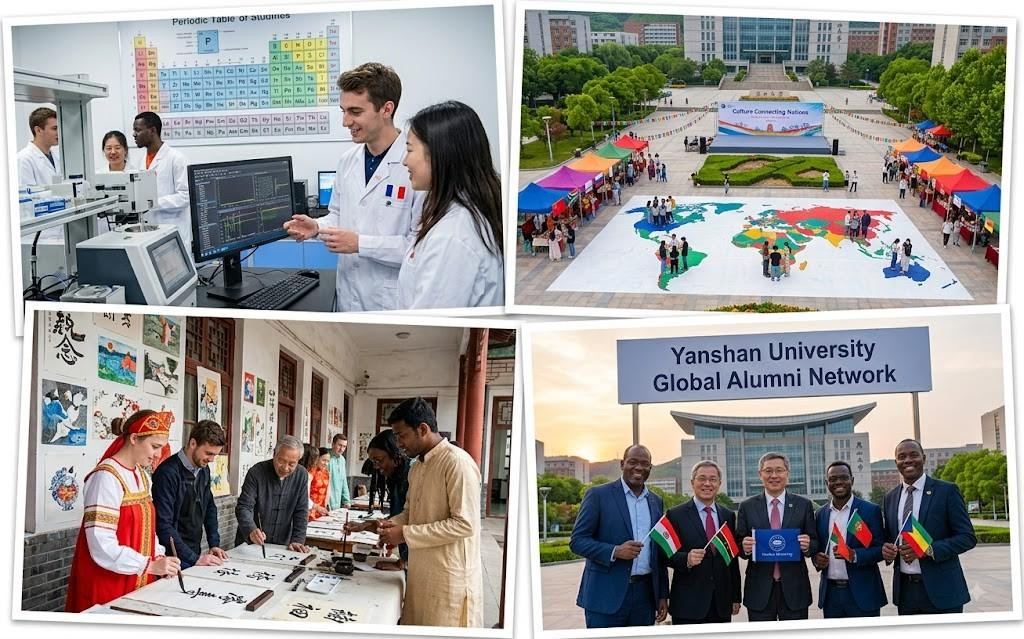
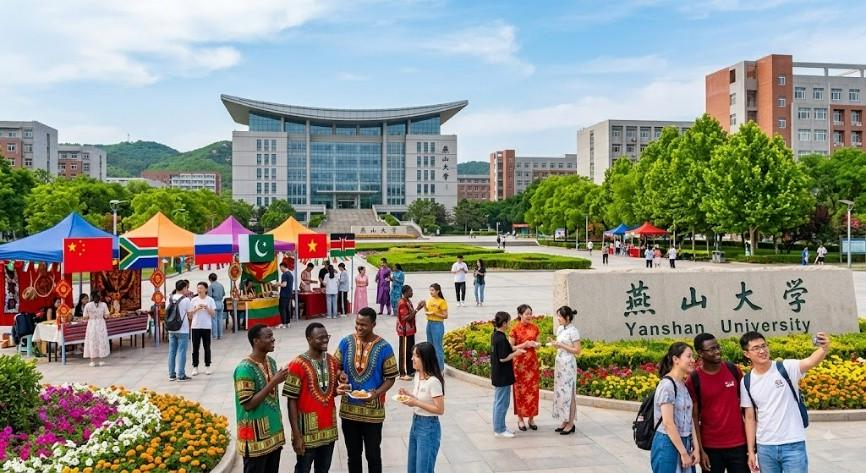
At Yanshan University in Qinhuangdao, students from different countries share classrooms, research interests, meals, conversations and ambitions. For an international student, this experience reveals something important: international education is not simply about foreign students coming to China to receive a degree. It is about creating a two-way exchange in which everyone has something to learn and something to contribute.
The First Crossing
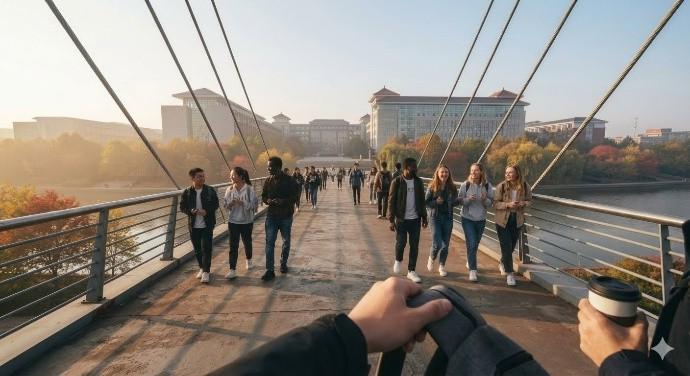
A campus provides an entry point into a new academic system, language and culture.
Professors introduce new ways of thinking. Chinese classmates offer perspectives shaped by their own experiences. International students bring ideas from their home countries.
Gradually, the unfamiliar becomes understandable.
For me, Yanshan University has been that first bridge between what I knew before coming to China and what I have discovered since arriving.
A Classroom With No Single Perspective
The most interesting classrooms are not necessarily those where everyone agrees.
International education becomes meaningful when students realize that the same question can have different answers depending on cultural, economic and social perspectives.
As a student of economics and management, I have experienced how discussions about business, technology and organizations can become richer when students bring experiences from different countries.
One student may approach a problem through China’s rapidly changing business environment. Another may compare it with South Asia, Europe, Africa or another region.
The classroom therefore becomes more than a place for delivering information. It becomes a meeting point for perspectives.
Research Crosses Borders Too
Research is another bridge.
My interest in artificial intelligence and human resource management has made me increasingly aware that technological transformation is not confined within national borders.
AI is changing recruitment, employee management, workplace communication and organizational decision-making across the world. Studying these questions in China allows me to examine them from an environment experiencing significant technological and economic transformation.
The research process therefore connects local experience with global questions.
Culture Travels in Both Directions
International exchange is also cultural.
A Chinese student explaining a traditional custom to an international classmate is participating in cultural diplomacy. An international student sharing a festival, food tradition or story from home is doing the same.
These exchanges may seem small, but they can challenge stereotypes more effectively than formal speeches.
Sometimes understanding begins with something as simple as asking, “How do you celebrate this in your country?”
That question can open a conversation that crosses thousands of kilometers.
The Bridge Works Both Ways
There is an important misconception about international education: that the international student is always the learner and the host country is always the teacher.
My experience suggests something different.
I have learned from China, but I have also shared my own experiences, perspectives and culture. Chinese students and professors have introduced me to ideas that were unfamiliar to me, while conversations with international classmates have reminded me that China itself is being observed, understood and experienced by people from around the world.
That two-way movement is what makes a bridge useful.
Building tomorrow’s Global Citizens
Universities have a responsibility that extends beyond producing graduates.
They can prepare people to communicate across borders, work with unfamiliar perspectives and understand that global problems rarely have single-country solutions.
Yanshan University has become part of my own journey toward that kind of global outlook.
The bridge I walk every day is not made of concrete or steel. I t is made of classrooms, research discussions, friendships, cultural exchanges and shared ambitions.
Perhaps that is the greatest value of international education:
not simply bringing the world to China, but helping people from different parts of the world understand one another well enough to build the future together.