




Experts Call for Review of Petroleum Levy Burden, Circular Debt, and Carbon Financing; Concerns Raised Over Climate Finance Gap
Align Energy Investments with Sustainability, Affordability, and Structural Reform Goals, Says Dr. Abid and Others
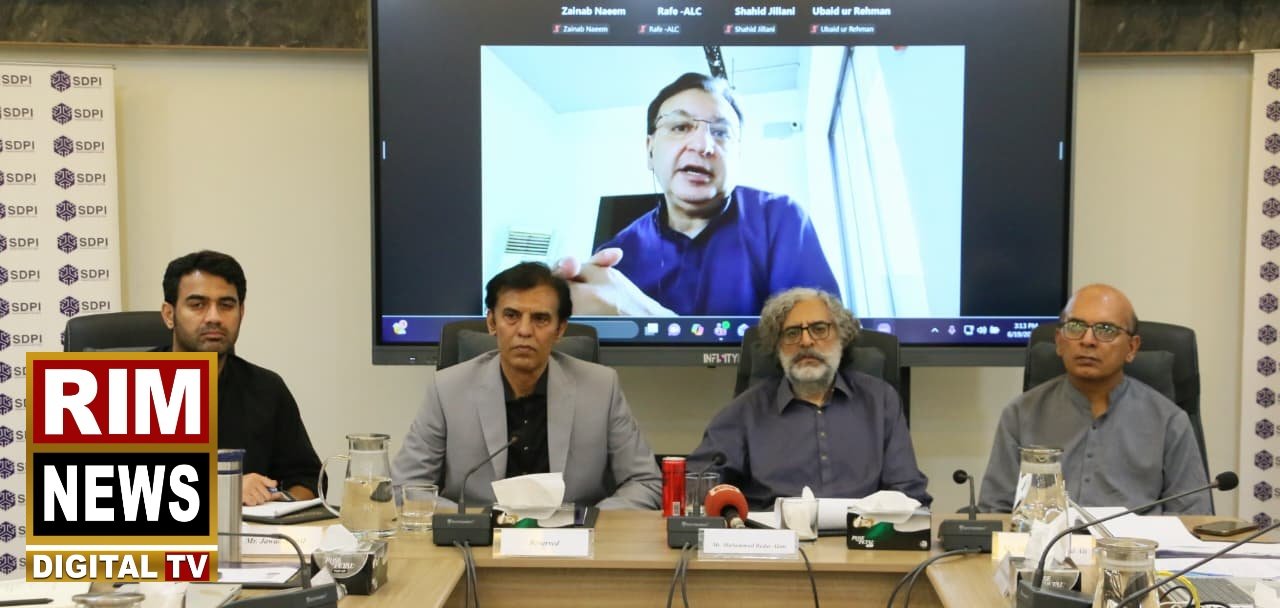
Islamabad (Staff Reporter) – Energy experts, economists, climate policy specialists, and representatives of civil society have emphasized the urgent need for comprehensive reforms in Pakistan’s energy sector during an important post-budget dialogue. Participants stated that future fiscal planning should be aligned with power system modernization, energy storage capacity, transition to electric transportation, and a clear framework for climate finance protection, as the current fiscal structure is not only aggravating the energy crisis but also deepening Pakistan’s vulnerability to climate risks.
They stressed that future budget planning should prioritize power system modernization, energy storage capacity, climate finance resources, transportation electrification, and administrative reforms.
These recommendations were presented during a post-budget dialogue titled “Fiscal Allocation and Policy Priorities in the Energy Sector,” organized by the Sustainable Development Policy Institute (SDPI) and the Pakistan Renewable Energy Coalition. Participants reviewed the impact of the federal budget on the energy sector, climate resilience, and fiscal stability.
Opening the discussion, Dr. Abid Qaiyum Suleri stated that energy investments must be aligned with the goals of sustainability, affordable energy access, and climate resilience. He said that fiscal planning should support Pakistan’s long-term energy transition while also addressing the structural weaknesses of the power sector.
Presenting an economic perspective, Dr. Khakan Najeeb stated that the Petroleum Development Levy has become a form of taxation that places a disproportionate burden on low-income groups. He suggested that the system should be reviewed within the framework of the National Finance Commission and that revenue generated through carbon levies should be specifically allocated for climate and green investments.
He also highlighted persistent weaknesses in the power sector, including circular debt, line losses, and poor recoveries. According to him, there is a need for better governance of distribution companies, targeted subsidies, and transparent financial systems.
SDPI Energy Unit Head Ubaid-ur-Rehman Zia informed participants that Rs. 116.2 billion has been allocated under the development program for the energy sector, including Rs. 88 billion for the power sector and Rs. 28.2 billion for hydropower projects. He described funding for transmission infrastructure and battery storage systems as a positive step toward modernization of the power system.
Representing the Pakistan Renewable Energy Coalition, Dr. Owais Abdul Rehman expressed concern that only Rs. 500 million had been allocated for the battery storage system project, whereas approximately Rs. 112 billion was required for its implementation.
He also described inconsistent tax policies on batteries used in electric vehicles and solar systems as a major obstacle to the development of local industry.
SDPI’s Zainab Naeem stated that climate-related expenditures have witnessed a significant decline. She noted that the Ministry of Climate Change has been allocated only Rs. 2.48 billion under the development program, which is far below the requirements posed by the country’s increasing climate vulnerabilities.
She further stated that the growth of solar energy in Pakistan has largely been driven by citizens and market demand.
Head of the Policy Research Institute, Badr Alam, said that the Petroleum Development Levy has now become a major source of government revenue and has increased significantly in recent years. According to him, the system weakens fiscal federalism and places an unequal burden on the public.
Another expert pointed out the growing circular debt crisis in the gas sector, which has reached approximately Rs. 3.44 trillion. He emphasized the need for reforms, improved management, and better demand regulation.
He added that fiscal policies should be aligned with Pakistan’s climate goals and energy transition objectives.
Discussing the transition toward electric mobility in the transportation sector, Shahid Shah Jillani of the Indus Consortium welcomed the approval of Rs. 9 billion for two- and three-wheeler electric vehicle initiatives but expressed concern over the absence of separate funding for charging infrastructure and the lack of a transition plan for workers dependent on conventional fuels.
In the concluding session, Executive Director of the Centre for Peace and Development, Mukhtar Ahmed Ali, acknowledged progress in achieving macroeconomic stability but warned that rising current expenditures and financial liabilities associated with development projects are restricting development spending.
He criticized weak parliamentary oversight of the budget and called for strengthening transparency, accountability, and public monitoring mechanisms.
At the end of the session, participants discussed the documentary film “Shamsi” by filmmaker Javed Sharif, which highlights how uninterrupted solar energy has transformed lives in remote areas of Southern Punjab. Participants remarked that the film demonstrates how locally developed renewable energy solutions can improve employment opportunities, agricultural productivity, and climate resilience.