




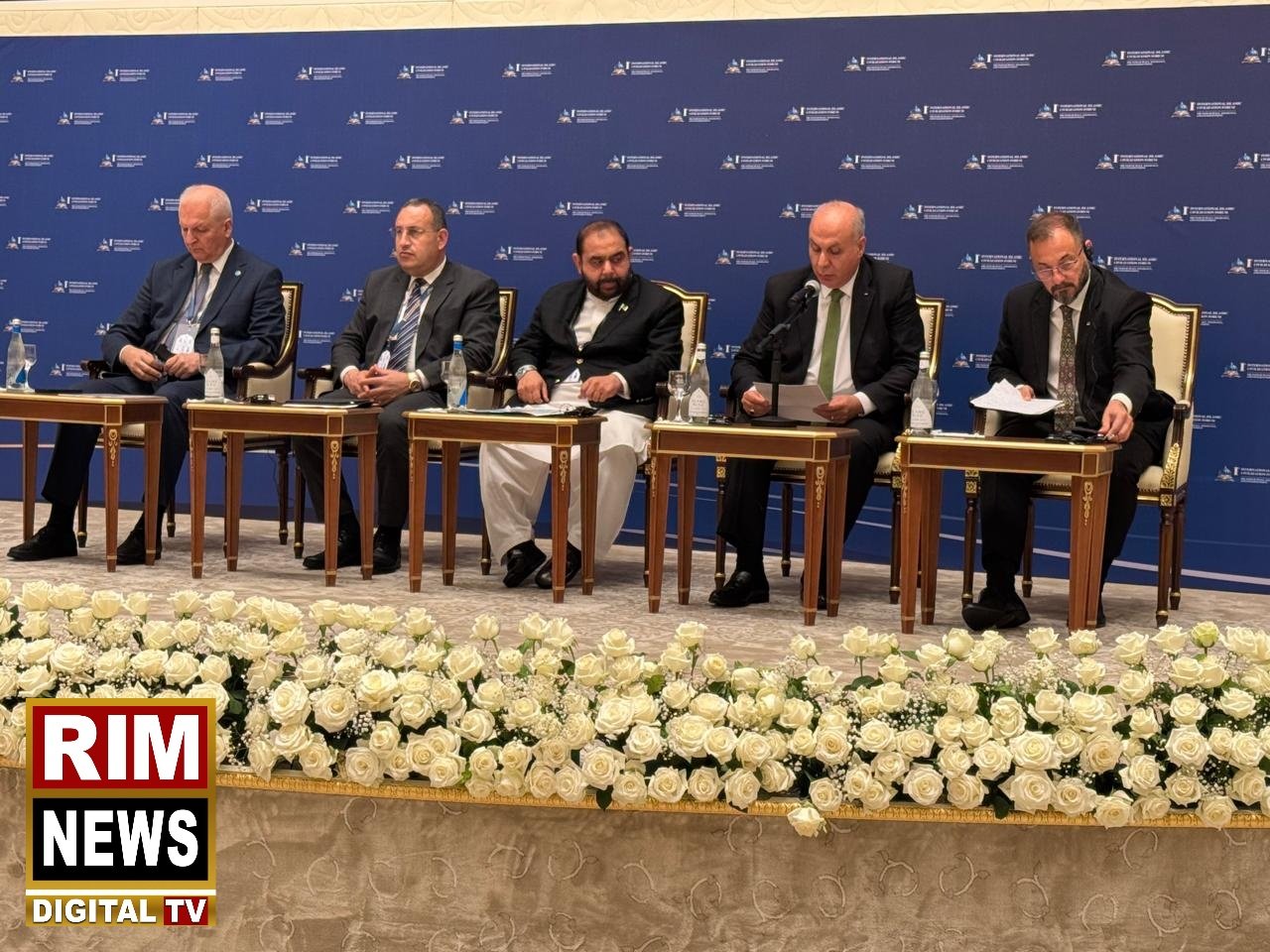
Islamabad (City Reporter) — The first international conference on Islamic civilization is being held in Tashkent, the capital of Uzbekistan, from July 7 to 11, 2026, under the theme “The Path of Peace, Tolerance and Enlightenment.”
The international conference is being hosted by the International Center for Islamic Civilization. The opening session of the conference was held today, in which Pakistan was represented by Mr. Aurangzeb Khan Khichi, Federal Minister for National Heritage and Culture, Government of Pakistan, and Professor Dr. Muhammad Saleem Mazhar, Director General of the National Language Promotion Department, Islamabad.
Representing Pakistan at the inaugural session, Aurangzeb Khan Khichi appreciated the initiative of the organizers and congratulated them for arranging the conference. He emphasized that unity among the Muslim Ummah is of vital importance for the revival and progress of Islamic civilization.
Mr. Khichi highlighted that the great poet of the East and philosopher of Pakistan, Allama Muhammad Iqbal, also emphasized the importance of Muslim unity and advised avoiding mutual differences. He stated that Central Asia’s great Sufi scholars hold a significant place among the intellectual influences of Allama Iqbal.
He said that through the remarkable efforts of great Sufi personalities including Khawaja Moinuddin Chishti Ajmeri, Syed Ali Hamdani, Zia Nakhshabi, and Khawaja Qutbuddin Bakhtiar Kaki, the light of Islam spread across South Asia and the region emerged from darkness. These Sufi saints had travelled from Central Asia to the subcontinent; therefore, Aurangzeb Khan Khichi regarded them among the founders and contributors of Pakistan.
In his address, Aurangzeb Khan Khichi further stated that Muslims rightly take pride in their glorious past, but today there is a need to work collectively, in the light of Islamic teachings, to make their present and future equally remarkable.
He also reaffirmed Pakistan’s strong willingness to work together with Uzbekistan in the fields of higher education, technology, and culture.