





By Muhammad Awais Hamza.
Master’s Programme, School of Economics and Management,
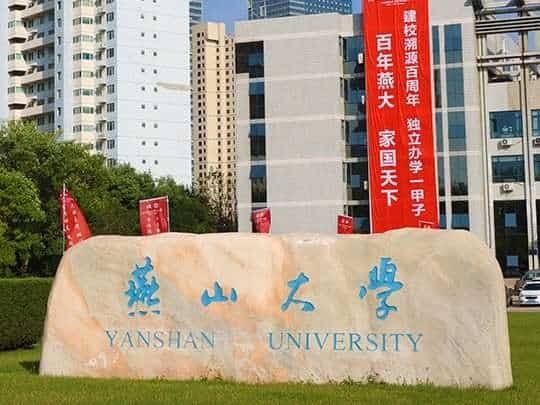
Yanshan University, Qinhuangdao City, Hebei Province, China.
When I left Pakistan to begin my MBA at Yanshan University in Qinhuangdao, China, I thought I was travelling for one purpose: to earn a degree. Like many international students, I imagined long hours in classrooms, assignments, and exams. What I did not expect was that the biggest lessons would happen outside the classroom.
Studying in China has changed not only the way I learn but also the way I think, solve problems, and understand the world.
Growing up in Pakistan, my education was built on hard work, respect for teachers, and a strong focus on examinations. We spent many hours studying textbooks and preparing for tests. That system gave me a solid academic foundation and taught me discipline. However, I often found myself searching for opportunities to ask bigger questions, think more critically, and connect what I learned to real-life situations.
I discovered that opportunity at Yanshan University, from my first semester, I noticed that classes were more interactive than I had expected. Professors encouraged students to ask questions, discuss different opinions, and support their ideas with research. Instead of simply memorizing theories, we were expected to understand them, challenge them, and apply them to real business problems.
At first, this was not easy, I was used to listening quietly in class. Speaking up during discussions made me nervous because I worried about making mistakes. But my professors created an environment where every thoughtful question was welcomed. Gradually, I became more confident in expressing my opinions. I realized that learning is not about having all the answers—it is about being willing to ask the right questions.
Outside the classroom, life in China became another teacher. Simple daily activities such as shopping, travelling on public transport, or ordering food often became small adventures because of the language barrier. There were moments of confusion and frustration, but each challenge helped me become more independent. I learned that confidence is built one small step at a time.
Living in an international environment also broadened my perspective. My classmates came from different countries, cultures, and professional backgrounds. Group discussions often introduced ideas I had never considered before. Listening to different viewpoints taught me that there is rarely only one way to solve a problem.
One of the biggest differences I noticed between Pakistan and China was the emphasis on research. At Yanshan University, students are encouraged to explore ideas beyond textbooks, read international research, and develop practical solutions to real-world challenges. As an MBA student researching Artificial Intelligence in Human Resource Management, I learned that research is not just an academic requirement—it is a way of understanding and improving the world around us.
Technology also plays a larger role in everyday learning. Digital libraries, online learning platforms, and modern classroom tools make education more organized and accessible. These resources encouraged me to become a more independent learner and helped me develop skills that will remain valuable throughout my career.
Looking back, I no longer see my time in China as simply studying abroad. It has been a journey of personal growth. Pakistan gave me strong academic roots, while China has helped me develop confidence, curiosity, and the courage to think independently.
Education is more than earning good grades or collecting certificates. It is about becoming a person who can adapt, communicate, and continue learning throughout life. When I eventually return home, I will bring back much more than an MBA degree. I will return with new perspectives, stronger confidence, and a belief that the most meaningful education often begins when we step outside our comfort zone.